Five Key Benefits of Migrating SAP BW to the Cloud
The year 2027 is quickly approaching, which marks the official end of support for SAP BW 7.5 on-premises. For many companies, this means their SAP Business Warehouse, a system that has evolved and proven itself over the years, needs urgent modernization.
The good news? This step is much more than a tedious IT obligation or mere risk mitigation. Upon closer inspection, what may sound like a chore to some turns out to be an opportunity to transform SAP BW into a strategic innovation platform.
Below are five key benefits explaining why migrating your SAP BW system to the SAP Business Data Cloud (SAP BDC) is worthwhile right now.
1. Immediate Maintenance Guarantee Through 2030 (or 2040)
Let’s start with the most pragmatic reason: Those who adopt the SAP Business Data Cloud gain valuable time. On-premises customers are under significant time pressure, but a smart cloud migration provides them with much-needed breathing room.
The specific benefits are:
- Migration path maintenance is secured until migration to the Private Cloud Edition (PCE) in 2030 and conversion to SAP BW/4HANA in 2040.
- This takes the pressure off short-term planning and enables clean modernization without “flying blind.” You have time to plan a well-thought-out transformation instead of making costly mistakes under time pressure.
2. Old knowledge, new power
Many companies have invested significant time, money, and knowledge into their BW data models over the years. A migration does not mean throwing all of that away, quite the contrary.
SAP’s “Shift” approach is designed to preserve existing assets.
Data models remain intact. Your complex structures do not need to be rebuilt from scratch.
Seamless Transformation: The Data Product Generator easily converts existing InfoProviders (such as DataStore Objects) into modern cloud data products.
Massive Time Savings: The “lift and shift” approach significantly reduces development time and costs.
The result: You can continue using your proven data structures while expanding them with modern cloud functionalities.
3. Drastic Reduction in Operating Costs (TCO)
Exclusively running legacy systems on-premises is expensive and ties up valuable IT resources for routine tasks. The cloud streamlines this process completely.
Here’s how you save:
- Cost Factor: On-premises vs. cloud (SAP BDC)
- Hardware costs: High investments are eliminated completely.
- System patching and maintenance: An in-house IT team is replaced with a managed service.
- Backups: Own infrastructure is replaced with automated backups.
- Scaling: Lengthy procurement is replaced with elastic, on-demand scaling.
- Additional leverage: SAP HANA Data Lake
With integrated object storage, you can cost-effectively offload large amounts of “cold data.” This significantly reduces expensive storage pressure on the core system and optimizes your total costs sustainably.
4. AI and machine learning without data copying
To remain competitive in today’s market, data must be usable for artificial intelligence (AI). The SAP Business Data Cloud is at the heart of SAP’s AI strategy. One of its technological advantages is the “zero-copy” principle.
Here’s how it works:
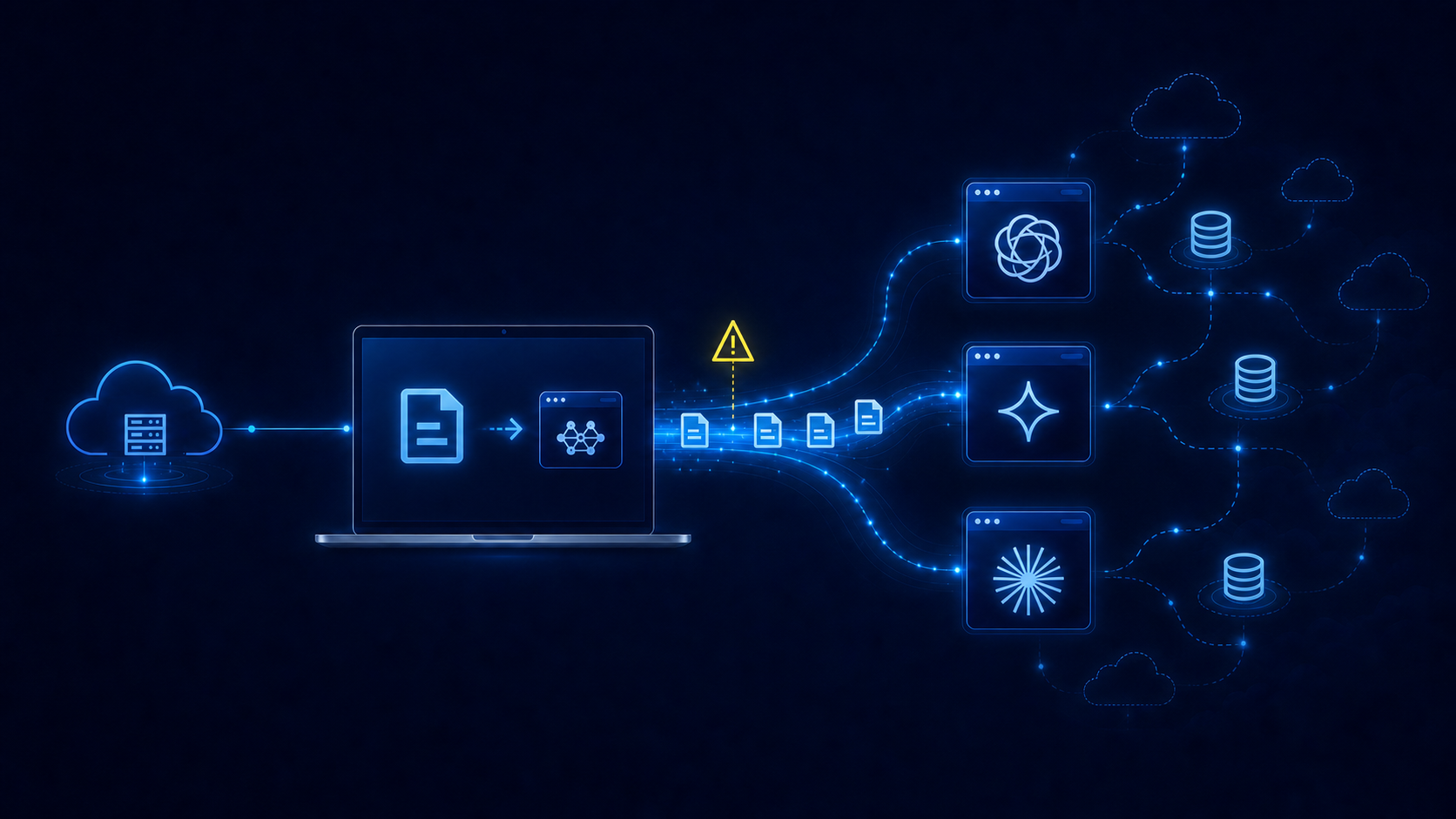
- Delta Sharing: BW data can be shared bidirectionally with SAP Databricks.
- No Redundancy: You can train AI and machine learning models directly on your business data without creating costly data copies.
- Breaking Down Silos: This technology creates a precise, unified foundation for future-proof analytics.
- Benefits include direct access for data scientists to up-to-date business data, eliminating the usual delays and costs associated with data replication.
5. Breaking Down Data Silos in the Open Data Ecosystem
Traditional data warehouses often operate as isolated silos. SAP BDC, on the other hand, functions as an open ecosystem that delivers business insights instantly.
The benefits of the open data ecosystem:
- Seamless integration: Connect SAP data with non-SAP platforms, such as Google BigQuery or Microsoft Fabric, without the need for constant, time-consuming ETL processes.
- Semantic layer: All data retains its valuable business context and can be analyzed across the entire organization.
- Intelligent applications: Preconfigured dashboards for SAP Analytics Cloud can be installed with minimal effort to automate data replication.
This means faster access to AI-powered insights for your business users. They will have faster access to AI-powered insights while the old system is gradually phased out.
The transition from reporting to data-driven innovation is not a necessary evil, but rather a step away from rigid on-premises structures. It is the path from pure reporting to data-driven innovation.
The five benefits at a glance
- Maintenance security: Up to 13 years of additional support.
- Investment protection: Existing models are retained.
- TCO reduction: No hardware and elastic scaling.
- AI readiness: Zero-copy for machine learning.
- Open ecosystem: No data silos and immediate insights.
Don’t put off modernizing your data landscape. Start now with an assessment to avoid hasty decisions and prepare your company for a data-driven future.
Your next steps
Start now with an assessment of your systems. PCG will support you every step of the way, from analyzing your existing BW landscape to operating successfully in the cloud.
Our BW assessment includes:
Inventory:
- Detailed analysis of your existing BW architecture, including data models, data flows, reports, and queries
Feasibility study:
- Assessment of migration effort
- Identification of complexities
- Creation of a clear roadmap with milestones and priorities
Architecture design:
- Design of the target architecture in the Business Data Cloud.
- We will determine which BW functions will be migrated to SAP Datasphere, as well as which new services (e.g., Data Lake) will be utilized.
Our goal is a smooth, risk-free transition that maximizes value for your business.
Want to know where your BW system stands today? Request an assessment now! Link to where?

VP Strategy & Brand
More about SAP