Debunking Myths: The 5 Biggest Fears IT Decision-Makers Have About Vibecoding—and How to Address Them
When the term “vibecoding” comes up in business units, it’s usually met with enthusiasm. Applications are described in natural language, AI tools generate user interfaces, and prototypes are ready within hours.
However, when the same term is mentioned to IT leadership, the CISO, or the head of software engineering, it often triggers a red alert. And for good reason: IT decision-makers are responsible for data security, system architecture, cost control, and the stability of the entire corporate landscape.
Fears of uncontrolled AI development are justified if you unleash raw consumer tools on employees without a protective layer. However, embedding Vibecoding in an industrial framework transforms the security risk into the greatest productivity lever in corporate history.
In this article, we examine the five most common objections raised by IT decision-makers and demonstrate how the PCG AI Gateway and PCG Vibe2Prod Factory address these concerns.
"Vibecoding produces low-quality, unstructured code and technical debt."
“The concern: If non-technicians write prompts, we’ll end up with unstructured code without documentation. My developers will have to painstakingly fix or rewrite this mess later.”
The Vibe2Prod Factory’s rebuttal:
The fallacy lies in the assumption that the AI-generated prototype goes directly into production. At the PCG Vibe2Prod Factory, the design created by the business department exclusively serves as a visual requirements baseline (front-end mockup).
This concern is entirely justified, and it holds true when using standard AI tools, such as GitHub Copilot, or other context-free agents in isolation. An agent with no knowledge of your existing software, architectural rules, or project history will generate code that is syntactically correct but ill-fitting. With every new request, the agent essentially starts from scratch and adds code that doesn’t fit into the bigger picture. The result is the dreaded “spaghetti code.”
This is precisely why we developed our Vibe2Prod approach. Rather than simply assigning a task to the AI agent, we build a complete, context-aware working environment for it. The harness that we configure for you is at the heart of this environment, ensuring that the agent does not operate in a vacuum. Instead, it forces the agent to behave like a disciplined developer.
- Full project context: The agent gains access to the relevant codebase and technical environment, allowing it to consistently and precisely integrate changes.
- Architectural Guiding Principles (Static Logic Gates): We firmly embed your architectural patterns and code structures within the harness. The agent cannot ignore these rules.
- Standardized Infrastructure-as-Code (IaC): The agent is guided to use only your predefined enterprise templates rather than creating its own infrastructure that deviates from yours.
- Test-Driven Ops: The Harness can be configured to require agents to create validation tests before generating production code.
With this approach, we transform the agent from an unpredictable code generator into a context-aware assistant that writes clean, integrated, and maintainable code according to your specifications.
"Security Vulnerabilities and Data Protection: The CISO will block this immediately."
The concern: AI models tend to introduce security vulnerabilities, such as a lack of input validation. Furthermore, sensitive company data and prompts end up on third-party servers in the U.S.
The rebuttal via AI Gateway and Shift-Left Security:
This concern is addressed on two crucial levels, which together form a seamless security chain.
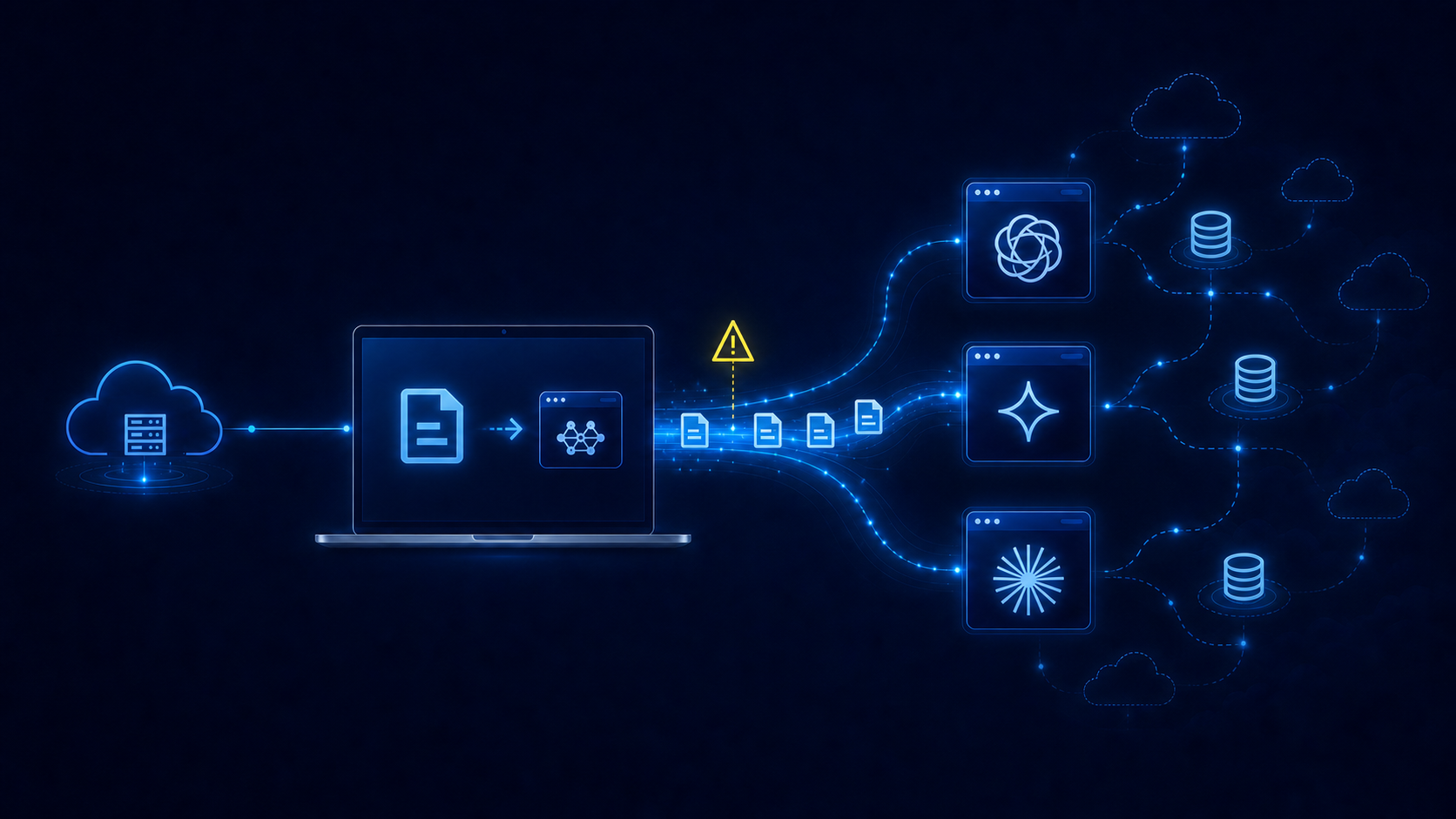
- The prompt level (PCG AI Gateway): The entire AI-powered development process uses the PCG AI Gateway as a central shield. It provides a secure connection to all AI models, guarantees zero data retention, and ensures strict compliance with the EU AI Act and GDPR. It also provides full cost control through automatic budget limits. Thus, your employees operate in a secure environment from the very first idea.
- The code level (harness-driven development): A single agent cannot generate secure systems. That’s why our experts configure the Harness to ensure the agent uses secure components. Harness ensures the integration of automatically hardened enterprise services, such as:
- Identity providers, such as Microsoft Entra ID or AWS Cognito, for secure login.
- Encrypted Platform as a Service (PaaS) services, such as DynamoDB or Cosmos DB, for data storage.
- Integrated security audits We can set up the Harness to integrate your existing security tools into the process and perform automated security checks.
"AI agents get stuck in endless loops and burn through our budget."
The concern: Agents are unpredictable. If an agent gets stuck in a loop, we’ll have burned through thousands of euros in token costs by morning.
The solution is three-tiered cost control.
Cost explosions only occur when there’s a lack of control. Our approach protects your budget with three safety nets that we set up for you.
- Strict budgets in the AI Gateway: We work with you to define precise cost caps per user, team, or agent project, with automatic alerts.
- Technical circuit breakers in the Harness: Our experts build emergency shutdowns into the Harness logic. If the system detects an infinite loop, execution stops.
- Active monitoring (Factory Supervisor Service): Automation requires oversight. As part of our Managed Agent Ops Service, PCG experts monitor system health, intervene in the event of unforeseen problems, and continuously optimize agent protocols.
"Our software developers will reject this."
The concern: My senior engineers either refuse to maintain AI-generated code or fear for their jobs.
The rebuttal is liberation rather than replacement.
Software developers hate repetitive assembly-line work. The Vibe2Prod approach automates this overhead by using a custom agent configured by us to write boilerplate code, standard interfaces, and unit tests.
The result: Senior engineers can move beyond “code typing” to focus on system architecture and code reviews. They retain final control, yet are freed from tedious tasks, allowing them to concentrate on complex business logic. The agent becomes a new team member, not a competitor.
"We're heading straight into the next vendor lock-in."
The concern: If we commit to a specific AI model or closed-source tool, we’ll be at the mercy of the vendor.
The rebuttal through independence in the Harness:
Our design is based on strict decoupling to ensure your independence.
- The logic lies in the Harness. We embed the architectural rules and security guidelines within your framework, not the AI model.
- We are model-agnostic via AI Gateway. You can swap out the underlying language model at any time (e.g., from OpenAI to Anthropic or Google).
- Full code ownership: The end result is clean code that runs 100% in your cloud accounts and belongs to you, not proprietary black-box code.
The Transformation Matrix
| The IT Decision Maker's Objection | Root Cause / Concern | The Solution with PCG AI Gateway + Vibe2Prod Factory |
|---|---|---|
|
1. Spaghetti Code & Tech Debt |
Fear of unstructured frontend code. |
PCG Harness: Forces agents into enterprise IaC patterns & test-driven ops. |
|
2. Security & CISO Veto |
Fear of data leaks & vulnerabilities. |
AI Gateway: GDPR/EU hosting + Shift-Left Security in the harness. |
|
3. Uncontrolled Costs |
Fear of agents running up costs unnoticed. |
Per-agent budgets in the gateway + circuit breakers & Factory Supervisor. |
|
4. Developer Resistance |
Fear of quality loss & job concerns. |
Liberation from boilerplate: Devs focus on architecture & core logic. |
|
5. Vendor Lock-in |
Dependency on single LLMs/vendors. |
Logic in the harness: Multi-cloud routing & full code ownership in your own cloud accounts. |
Don't let fear stop you
Harness skepticism and embed security
It’s common sense that IT decision-makers are skeptical of uncontrolled “Vibecoding.” Those who enable unsecured AI tools will face chaos.
The solution is not to ban it, but rather to industrialize it.
With the PCG AI Gateway, you can establish a solid foundation for governance. The PCG Vibe2Prod Factory provides your business units with a secure production line that transforms ideas into enterprise-grade software quickly—much to the delight of the business unit and the CISO.
Let’s discuss your concerns in detail. Every cloud landscape has its own rules. Book a scoping session with PCG’s Data, AI & Security Team. We will analyze your concerns, review your security requirements, and demonstrate how we integrate the Gateway and the Factory into your existing AWS, Azure, or GCP infrastructure.
Continue reading