Vibe2Prod: A Guide from AI Prototype to Enterprise Production
A Guide from AI Prototype to Enterprise Production
Vibe2Prod is the methodological and technical standard for development teams that have built innovative applications using AI-assisted coding, no-code tools, or rapid MVPs and now want to transition them into a real IT production environment in a stable, secure, and maintainable manner. It bridges the gap between that initial “It already works in the demo!” and long-term, reliable production operation for real users.
What is Vibe2Prod
Quick Answer: Vibe2Prod (a portmanteau of “Vibecoding to Production”) refers to the engineering-driven transformation process in which purely prompt-based, functional software prototypes are converted into hardened, enterprise-ready cloud applications. The framework complements the speed of generative development tools with traditional IT disciplines such as Infrastructure as Code (IaC), automated CI/CD pipelines, secret management, Identity & Access Management (IAM), and centralized monitoring.
Modern AI coding tools such as Claude Code, Cursor, or GitHub Copilot enable business units and developers alike to create functional software interfaces within a few hours. However, these prototypes are based on what is known as a “happy path”: They work under ideal test conditions but fail under real-world system loads, when data integrity is compromised, or during rigorous security testing. Vibe2Prod ensures that this prototype doesn’t have to be discarded, but instead serves as a visual and functional baseline for a scalable software architecture.
Vibecoding (prototype) vs. Vibe2Prod (production standard)
| Quality Dimension | Pure Vibecoding (Prototype) | Vibe2Prod (Enterprise Standard) |
|---|---|---|
|
Codebase & Maintainability |
Monolithic scripts, AI duplicates, no tests |
Modular clean-code architecture, linting, automated unit & integration tests |
|
Authentication & Permissions |
Hardcoded tokens, mock logins, open API keys |
Enterprise IAM (e.g., Entra ID, AWS Cognito), role-based access control (RBAC) |
|
Infrastructure & Cloud |
Local instances, temporary SQLite files, disposable servers |
Generation of the full-stack application (frontend, backend, middleware) including reproducible Infrastructure as Code (Terraform, Bicep, CDK) |
|
AI Integration & Governance |
Unfiltered prompts directly to external US providers |
Central AI Gateway with budget limits, EU GDPR compliance, and data privacy filters |
|
Operations & Observability |
Manual terminal commands, errors lead to white screens |
Automated CI/CD pipelines, structured logs, alerts, and rollback mechanisms |
What changes when moving from Vibe to Production
Quick Answer: The transition from Vibe to Production shifts the focus from pure feature discovery to full operational accountability. While a prototype only needs to prove feasibility, production requires guarantees for data security, reliability, user permissions, and GDPR compliance.
Anyone who deploys a quick prototype to real production systems typically encounters four fundamental gaps:
- Fragile authentication and session handling: A mock login in the prototype rarely distinguishes between tenants, regular users, and administrators.
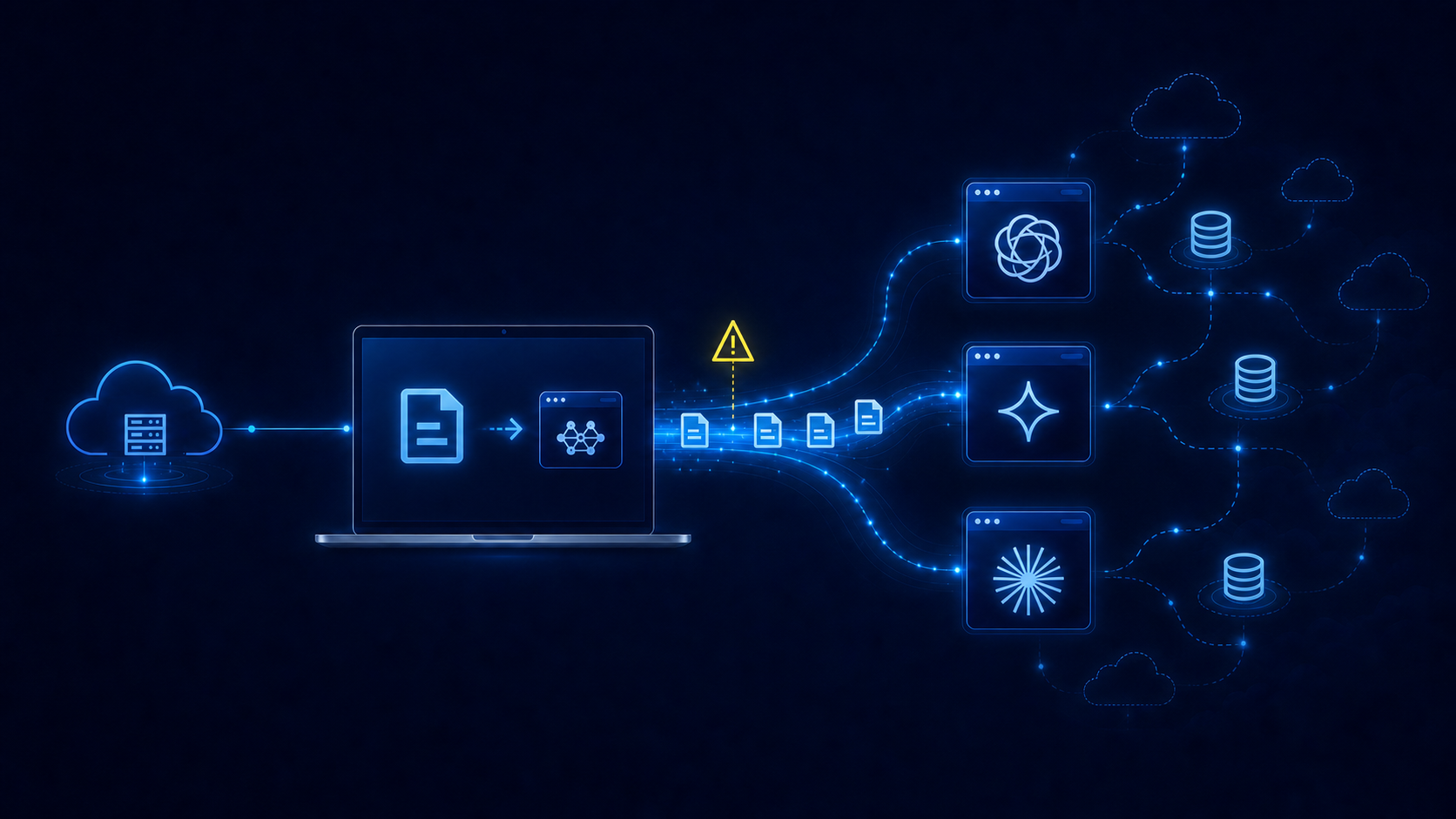
- Unprotected Data Flows & Shadow IT: If prompts contain sensitive business logic, confidential data flows unchecked to LLM providers without an upstream protective shield. Our guide to business department prototypes shows how companies can bridge this innovation gap between business units and the CISO.
- Lack of error and edge case handling: As soon as an API returns an unexpected JSON schema or a timeout occurs, the application freezes.
- Lack of scalability in data storage: Local sandbox databases cannot handle concurrent user access or meet backup requirements.
Vibe2Prod establishes a structured review process: What aspects of the prototype are worth keeping, what needs to be refactored, and which system components must be redeployed using cloud PaaS services before go-live?
How a Vibe2Prod Review Works
To avoid getting bogged down in weeks-long discussions about architecture or recklessly taking security risks, a professional Vibe2Prod review is structured into six operational steps:
- Validate the User Journey & UI States: The user interface is checked for completeness: Are loading bars provided for time-consuming AI calculations? Are there meaningful error messages and well-designed empty states when a query returns no results?
- Code Refactoring & Module Separation: Using strict guardrails in the harness, the AI-generated code is disentangled by specialized agents. Logic, state management, and the UI are strictly separated. Static code analysis identifies outdated or faulty third-party libraries.
- Shift-Left Security & Secret Scanning: All environment variables and API keys are removed from the source code and transferred to dedicated secret managers (e.g., AWS Secrets Manager, Azure Key Vault). Permissions are granted according to the principle of least privilege.
- Cloud Architecture & Infrastructure as Code (IaC): Manual, click-based setup is replaced by versionable templates. Whether serverless architectures with Azure Functions / AWS Lambda or containers in Kubernetes: The agent is instructed by the Harness framework to deploy the entire application and the underlying infrastructure in a reproducible, script-based manner (Full-Stack IaC).
- Integration of the AI Gateway: If a large language model is used in the backend, a central gateway acts as an intermediary. Our PCG AI Gateway for enterprise environments handles caching to reduce token costs, enforces PII masking (protection of personally identifiable information), and ensures that no model is retrained using customer data.
- Day-2 Operations & Monitoring: Set up automatic health checks, structured log files, and deployment pipelines with automatic rollbacks in case a release fails.
For which teams is Vibe2Prod essential
Vibe2Prod is designed for all stakeholders who want to leverage the speed of modern development tools without compromising the stability of their core business:
- Business Units (Sales, HR, Operations): Those who have built functional MVPs using AI tools like Lovable or v0 and now want IT to officially approve and host them.
- Corporate IT Leaders & CISOs: Those who don’t want to ban Vibecoding but need to provide a secure, automated gateway for business unit innovations.
- Product Owners & Innovation Teams: Who want to validate customer feedback using actual software without getting bogged down by months-long lead times in traditional development roadmaps.
- Senior Software Architects: Who want to delegate repetitive boilerplate tasks to AI agents and focus on core architectures, data protection, and governance.
Frequently Asked Questions About Vibe2Prod
Maintain speed, eliminate risks
AI-assisted software development is not a passing trend, but the new baseline for modern value creation. Anyone who tries to prevent vibecoding through strict bans creates frustration and uncontrolled shadow IT.
Vibe2Prod offers the perfect balance: You preserve the creators’ creative momentum while simultaneously establishing the level of security and quality that is non-negotiable for business-critical processes.
Get your prototypes up and running securely
Continue reading